

Delve into multimodal In Vitro Diagnostic (IVD) platforms at the POC, where cutting-edge technology meets clinical needs. We explore how these platforms integrate various diagnostic methods to provide fast, reliable results, uncovering the complexities and innovations in their development. From technological breakthroughs to design challenges, learn how these platforms are crafted to meet diverse medical needs quickly and effectively, shaping the future of rapid diagnostics and patient care.
In the dynamic diagnostics landscape, multimodal Point-of-Care (POC) In Vitro Diagnostic (IVD) platforms hold immense potential and promise. These innovative platforms offer rapid, lab-quality testing using only small blood samples. By providing less invasive blood collection methods, they enhance the patient experience and deliver comprehensive, accurate results to healthcare professionals in just 15 minutes. This swift turnaround allows for immediate medical decisions, potentially revolutionizing patient care and significantly improving health outcomes.
However, despite their immense potential, multimodal POC IVD platforms are not without their challenges. The issue of low sample volumes, for instance, can weaken signals, making it difficult to measure low analyte concentrations accurately. Moreover, the complexity of designing a platform that supports multiple measurement methods, such as absorbance/reflectance, fluorescence-based immunoassays, and digital imaging, presents a significant hurdle. The compact, cost-effective, and user-friendly nature required of these platforms further complicates their development. These challenges underscore the need for continuous innovation and problem-solving in this field.
Who is Leading the Charge?
The table below highlights several players in this field. Notably, these start-ups are focused on combining three core modalities: clinical chemistry, immunoassay, and hematology. This approach aligns well with the clinical demand for CBC, CMP, and other markers, such as lipids, CRP, and HbA1c. Each platform’s technical approach to immunoassays is unique while imaging systems and spectrophotometers are commonly used for hematology and clinical chemistry. Interestingly, Chronus Health has been adopting an all-electrical sensing technology, while Fluxergy differentiates itself by using the same imaging optics and cartridge technology across all modalities. These platforms can deliver a comprehensive panel of 30 or more markers in under 30 minutes, enabling doctors to gain valuable insights during a patient visit and improve care quality.
| Vital Bio | Truvian Sciences | Genalyte | Chronus Health | Fluxergy | Biosurfit | |
| Application Domain | clinical chemistry immunoassay hematology | clinical chemistry immunoassay hematology | clinical chemistry Immunoassay hematology | clinical chemistry immunoassay hematology | clinical chemistry immunoassay, hematology urinalysis molecular | clinical chemistry immunoassay hematology |
| Measurement Modality | information not available | confocal fluorescent laser scanning module for bead-based immunoassays | photonic chip technology for immunoassay | electrical sensing enabled by microfluidics, machine learning and aptamers | CMOS-based optics sensor for fluorescence, absorbance, urinalysis and cytometry | Surface plasmon resonance detection for immunoassay |
| Sample Volume | 300-600ul of blood | 300ul of blood | 35ul (for up to 26 immunoassay tests) | information not available | information not available | 8ul for CBC, 8ul for CRP, 8ul for HbA1c |
| Consumable Types | information not available | one disc for chemistry and immunoassay, another consumable for hematology | different consumables for different test modalities | one cartridge for CBC, one cartridge for CMP | multimodal test cards with up to 30 markers | One disc per test |
| Test Time | 20 minutes for roughly 40 test results | 30 minutes for roughly 30 test results | 30 minutes for TSH test | 15 minutes | information not available | 7 minutes for CBC, 4 minutes for CRP, 6 minutes for HbA1c |
It’s important to recognize that we are still far from delivering such extensive test results from just a single drop of blood (35 µL).
The Challenge of Small Sample Volumes
The goal is to minimize the amount of blood drawn from patients while maximizing the number of tests performed on a small sample. While finger prick methods are being developed to alleviate the fear associated with phlebotomy, they are limited to volumes of tens of microliters. The quality of blood sampling and storage is essential for accurate results. There is a delicate balance between reducing patient discomfort and obtaining sufficient capillary blood, as studies show that pain increases with deeper lancet penetration.
(https://www.ncbi.nlm.nih.gov/books/NBK138654/).
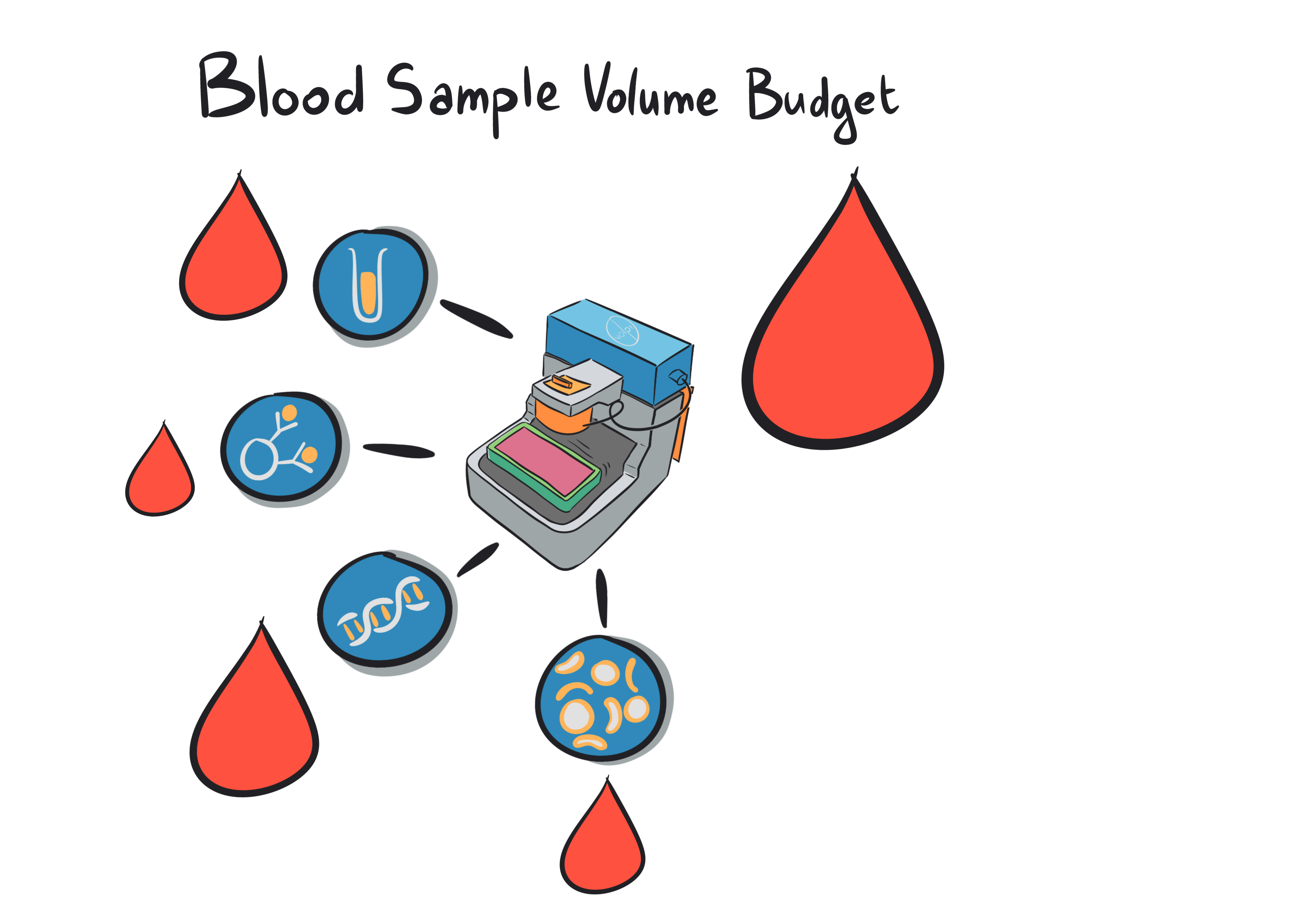
Reducing waste or dead volume in the microfluidic cartridge is essential to minimize patient discomfort and blood volume while finding the optimal balance between analytical performance, turnaround time, and cost.
Larger sample volumes typically yield more precise results for complete blood count (CBC) tests. Yet, smaller blood volumes for smears can greatly accelerate the time to results, highlighting the need to determine the ideal smear size. Additionally, advanced optics can improve precision and speed without raising costs (refer to Figure 2):
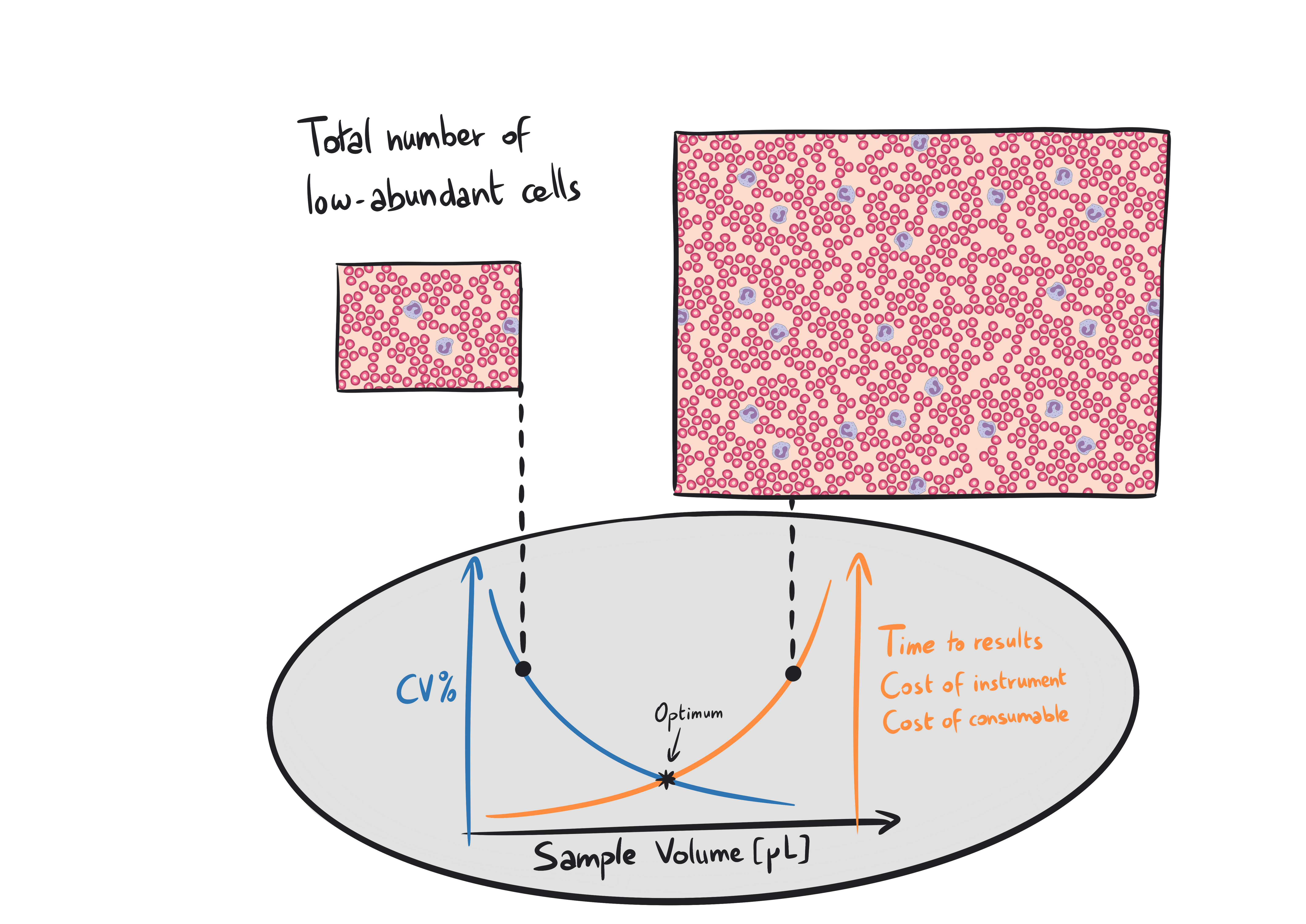
For instance, a 1 µL blood sample from a healthy individual contains around 5 million red blood cells and 6,000 white blood cells, predominantly neutrophils and lymphocytes, with only about 60 basophils (Source: Cleveland Clinic). Due to Poisson statistics, the coefficient of variation (CV) for accurately measuring basophil concentration is no better than 13%. However, increasing the sample volume to 20 µL can reduce this CV to 3%.
Using a 20 µL blood sample, a thin smear spans roughly 5,000 mm². To examine the entire smear and count all cells, a digital microscope with a 1 mm² field of view—adequate for cell resolution—would need to capture over 5,000 images. Employing a fluorescence signal to distinguish white blood cells, scanning the full area would take approximately an hour.
The blood smear size is critical; it must be large enough to accurately count basophils or other rare cells to ensure a quick result. Optics with a wider field of view can enhance both the speed and accuracy of results, but this comes with higher instrument costs.
For chemistry tests relying on absorbance or reflectance, a sensitive photometer is needed to precisely measure low analyte concentrations, a challenge with smaller sample volumes. Striking the right balance between sensitivity, speed of results, and cost is key (refer to Figure 3). A highly sensitive photometer with exceptional light stability is required to detect low analyte levels, which may involve multiple readings and additional time to minimize noise. Once again, finding the best compromise between precision, consumable costs, and instrument expenses is crucial.
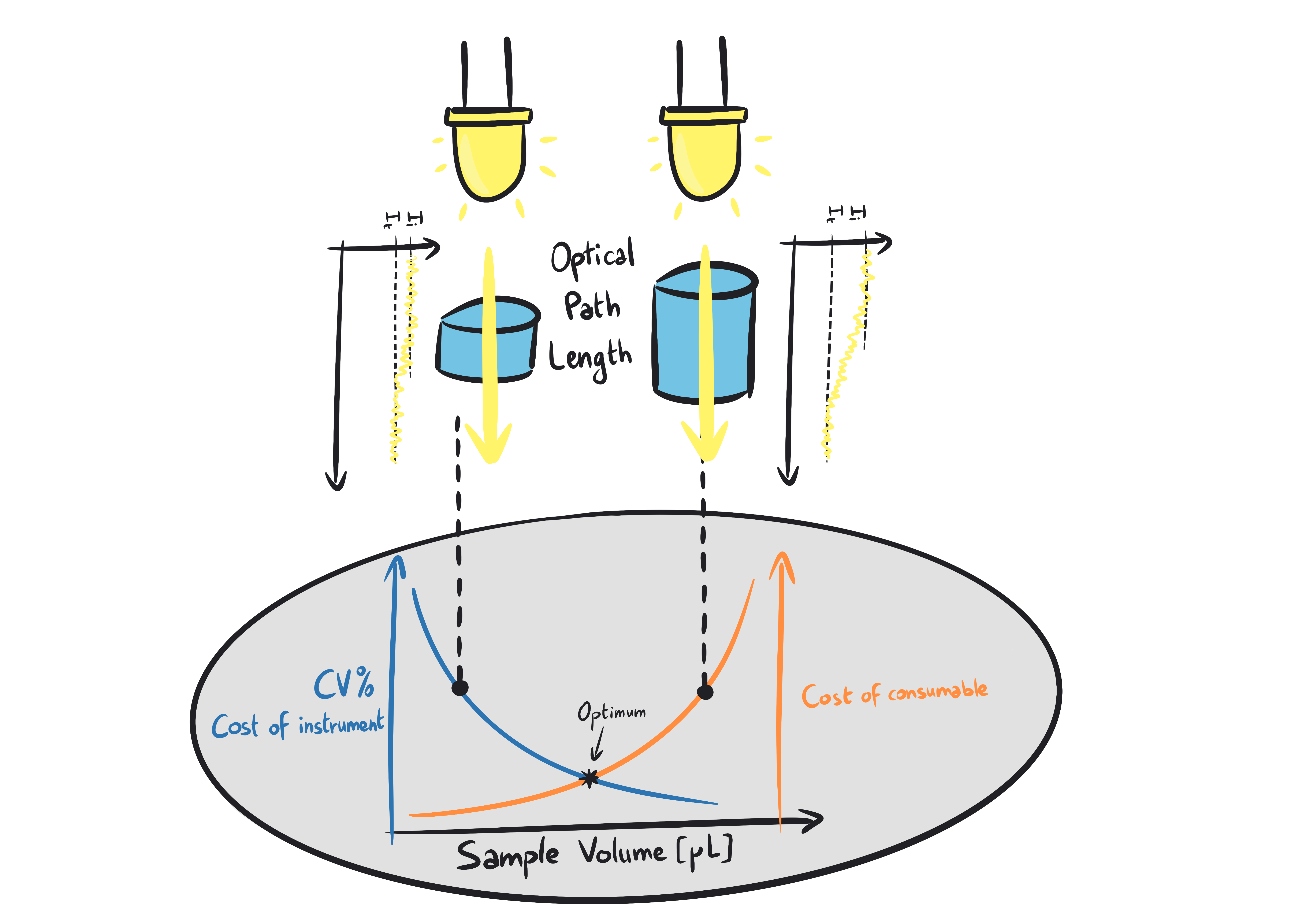
Creating fluorescence-based immunoassays to detect low-concentration cardiac markers like troponin in healthy individuals is more complex with smaller sample volumes. Evaluating different optics-based measurement methods and pinpointing cost-effective options that provide adequate sensitivity is crucial. For example, at a concentration of 1 pg/mL of cardiac troponin, roughly 1 million molecules are in 35 µL of blood. Reducing the volume to 1 µL leaves less than 30,000 molecules to detect. Calculating a photon budget can reveal if a cost-effective setup, such as an LED and photodiode, has enough sensitivity or if it’s necessary to invest in more sophisticated, expensive technologies like laser diodes, CMOS sensors, APDs, MPPCs, or PMTs.
The Complexity of Developing Multimodal Platforms
Developing a multimodal platform capable of performing various tests across different modalities is a complex process. It begins with defining the end users’ needs, including the assay menu, performance requirements, turnaround time, workflow, and cost targets—essentially, a product vision. This helps establish the problem to be addressed using consumables, optics detection systems, and algorithms. The next step involves exploring the known solution space. Combining expertise in biosensing, biochemistry, sample preparation, consumable design and manufacturing, optics-based measurement systems, and data analytics can maximize the space of known potential solutions (refer to the orange space in Figure 4).
Often, experimental data are needed to assess trade-offs and evaluate the performance and costs of different solution ideas, functions, and requirements. At this stage, expert solution partners are essential in developing initial breadboards and proof-of-concept units. However, for an IVD company, managing multiple partners, coordinating their efforts, and integrating their solutions into a functional prototype can be challenging. This complexity can limit the number of solutions explored within a given timeframe and budget during the research and concept phase (refer to the blue space in Figure 4). Potential consequences include longer time to market, suboptimal product performance or cost, or even the halt of the platform development program.
Volpi’s Innovative Solutions
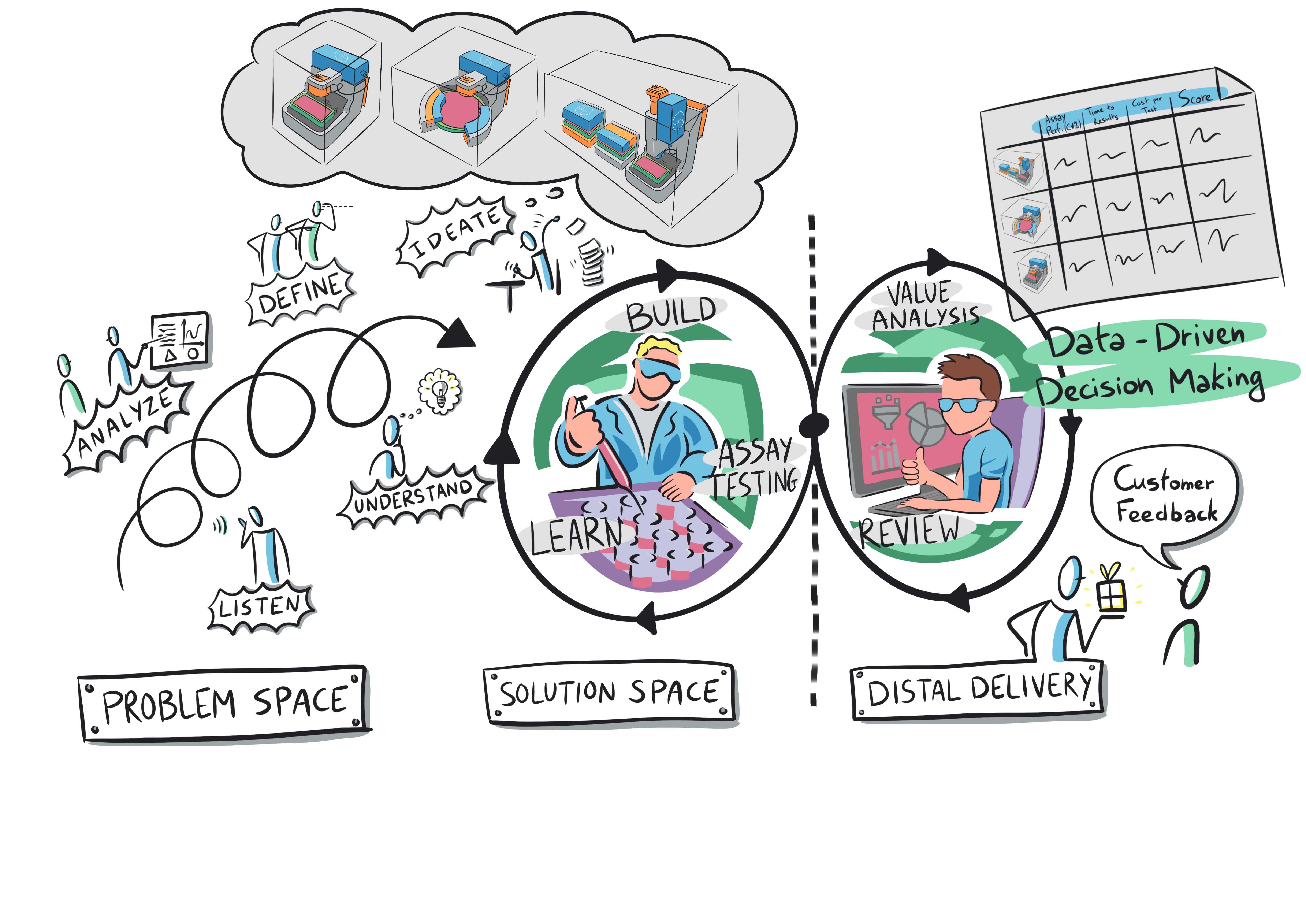
With our biosensing expertise and capabilities in cost-efficient optics system design and manufacturing, sample preparation, assay testing, and data analytics, Volpi helps reduce the number of necessary partners and offers end-to-end solutions for quickly evaluating different concepts. This enables us to rapidly deliver experimental data on assay performance and costs for various concept solutions, maximizing the outcomes of the research and concept phase (see Figure 4).
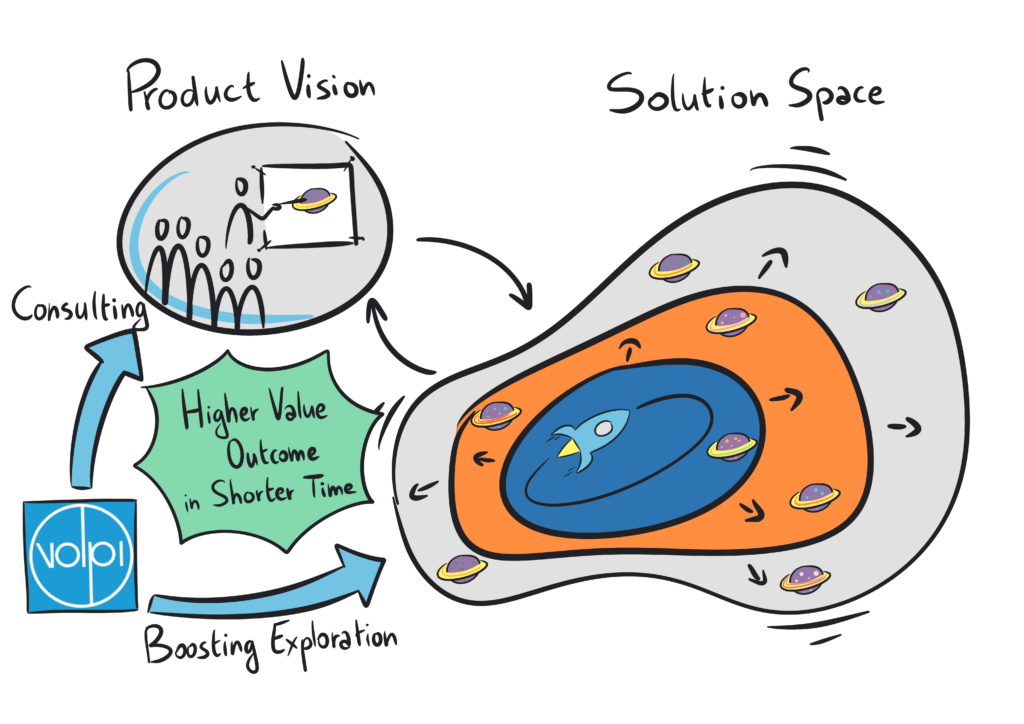
Scientists at our company focus on developing measurement principles and selecting appropriate methods for each test modality. Engineers then translate these concepts into visual representations of various technical solutions and platform designs, including setups from multiple cartridges and optics modules to single-cartridge systems, typically the most technically complex. Simultaneously, our most experienced experts provide guidance on the product’s vision, influencing the spectrum of potential solutions and outlining alternative strategies for market entry or further product development. During the research and concept phase, there is a risk of focusing too much on the specifications of the optics system and consumables without fully considering their impact on assay results. Defining performance requirements for various components in advance is challenging, and they’re often set higher than necessary, which can drive up product costs. While estimating the cost of different functions or specifications to select the optimal concept is useful, this approach alone isn’t enough. It’s also more beneficial to evaluate how these functions and specifications influence overall outcomes, including assay performance, turnaround time, workflow, and end-user acceptance.
Leveraging our expertise in sample preparation, consumable design, quick prototyping of optical measurement systems, and data analytics, Volpi is the ideal partner for swift and efficient concept generation, exploration, and assay testing. Volpi delivers valuable data regarding the cost and effectiveness of different functions and specifications, enabling informed decisions and pinpointing the optimal solution concept for a multimodal IVD platform (see Figure 5).
We understand the unique challenges that leading IVD brands face in advancing patient care. That’s why we focus on delivering solutions that empower these companies to stay ahead in the rapidly evolving landscape of multimodal IVD platforms. Our goal is to help leading IVD brands improve patient outcomes through high-quality, effective technologies designed to meet their specific requirements.

Dr. Alexandre Larmagnac
Head of Applications & Sales Support